History
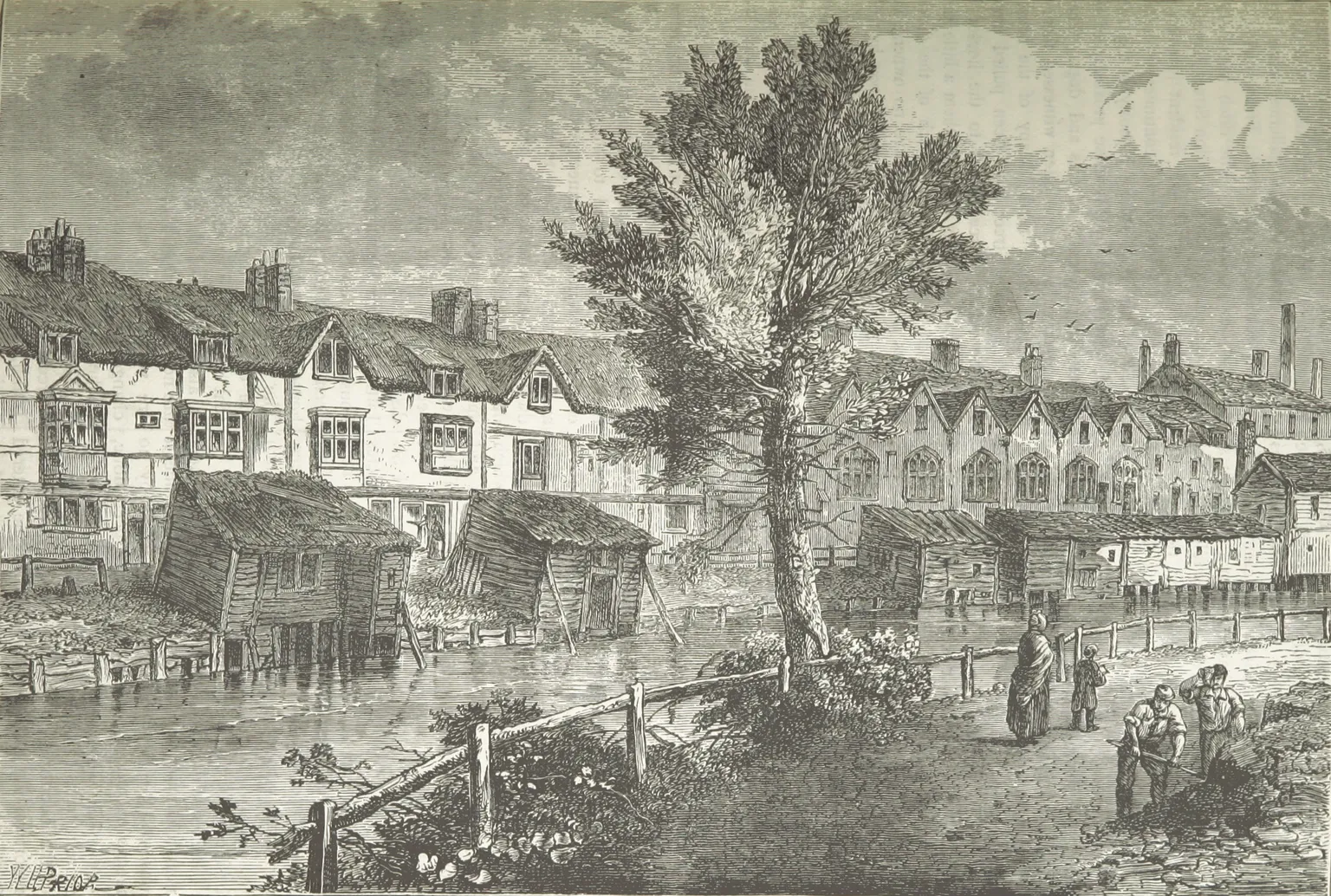
London's original riverside warehouse district.
Shad Thames was once the largest warehouse complex in London. Tea, coffee, spice and grain landed here from across the world, hauled between buildings on the lattice iron bridges that still cross the lane overhead. A "sufferance wharf" was a landing place licensed by special permission, outside the legal quays of the City of London: that licence is where the building's name comes from.
The wharf stands at the head of St Saviour's Dock, the tidal inlet where the lost River Neckinger meets the Thames, one of the most atmospheric corners of the river, ringed by converted warehouses. When the docks closed, this stretch of Bermondsey was reimagined building by building, and Shad Thames became a byword for warehouse living.
Scotts Sufferance Wharf carries that story on: exposed brickwork, ironwork and timber paired with light-filled modern interiors: a working past, a quietly contemporary present.
More about the wharf